
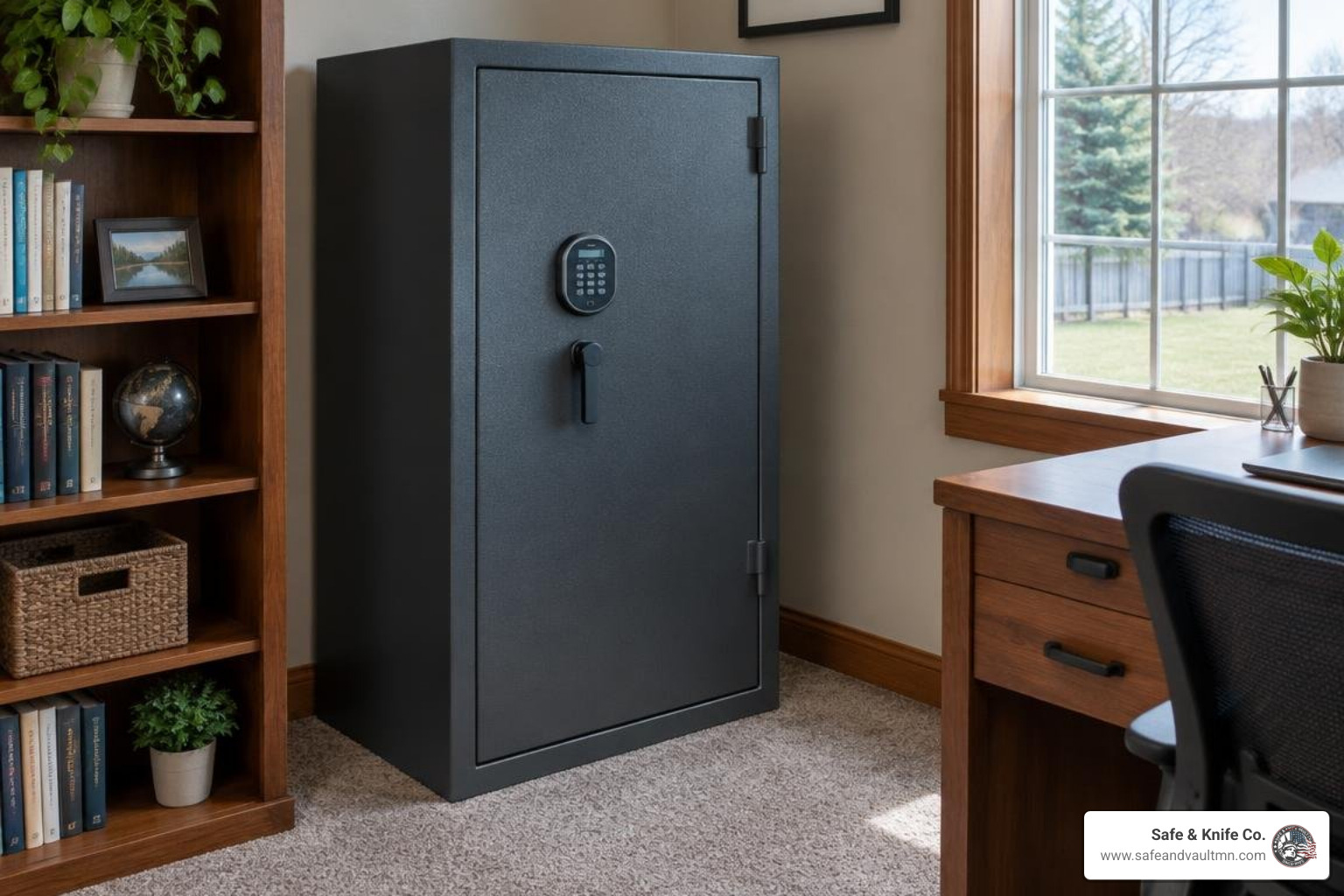
A gun safe for home storage gives you a designated place to store a firearm collection. Any resistance to heat or physical tampering depends on the exact model’s verified construction, published specifications, installation, and responsible storage practices. When comparing options, review the manufacturer documentation for steel construction, locking hardware, fire information, and anchoring instructions. Also confirm interior dimensions against the firearms and accessories you plan to store, and choose an installation location that can support the safe’s documented weight.
Safe & Knife Co. helps Minnesota and Wisconsin homeowners within approximately 250 miles of our Rogers and Lakeville showrooms (subject to service-address confirmation) compare models from reputable manufacturers like Champion, Superior, and American Security (AMSEC), and Fort Knox. Depending on current showroom displays and available product documentation, staff can discuss placement considerations and help you confirm whether delivery is available for your address.
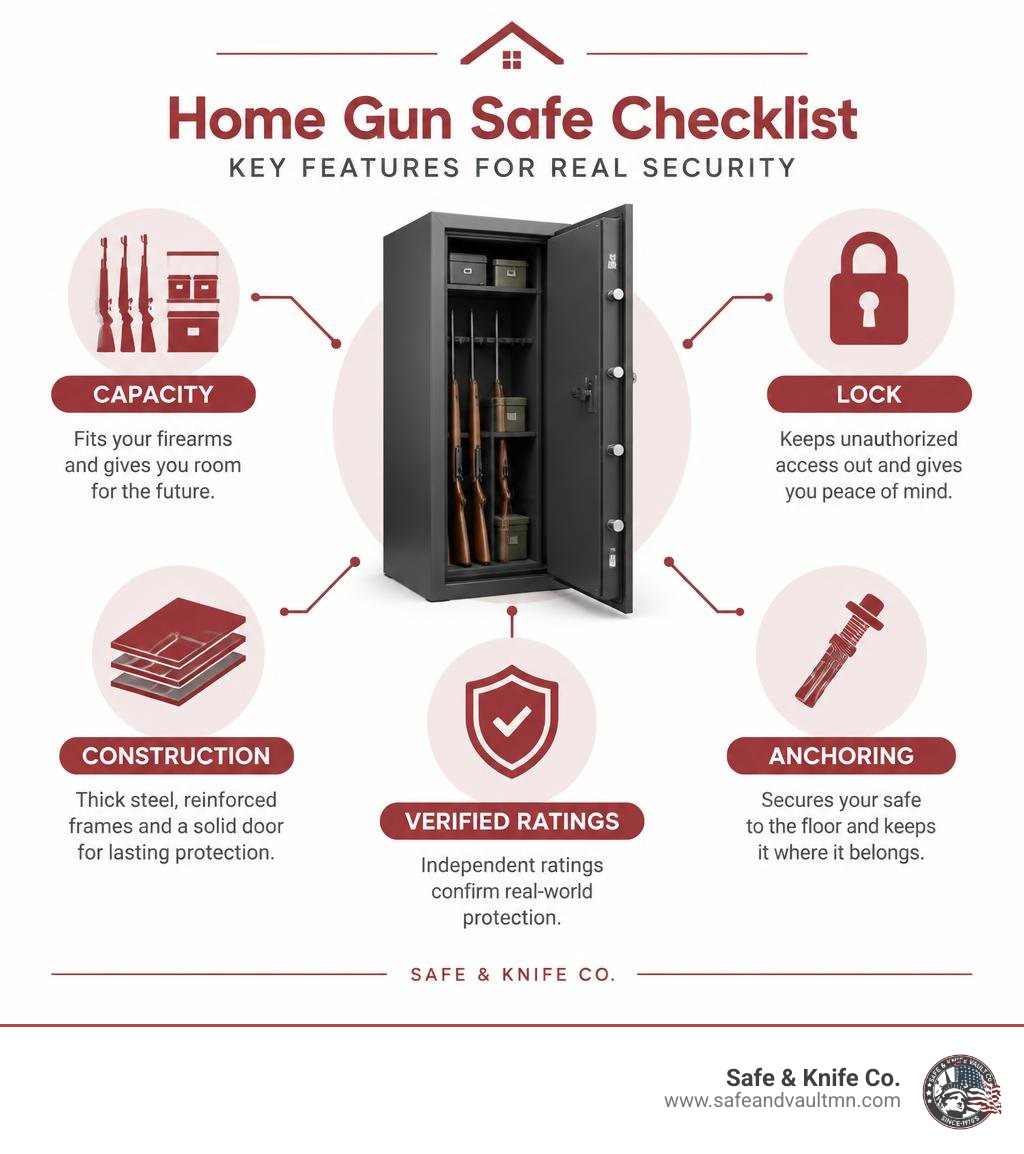
When evaluating residential firearm storage, compare the exact construction and listings of each model rather than relying on broad product labels. Manufacturer documentation can identify the body and door materials, lock type, anchoring provisions, and any independently verified security listing that applies to that specific model.
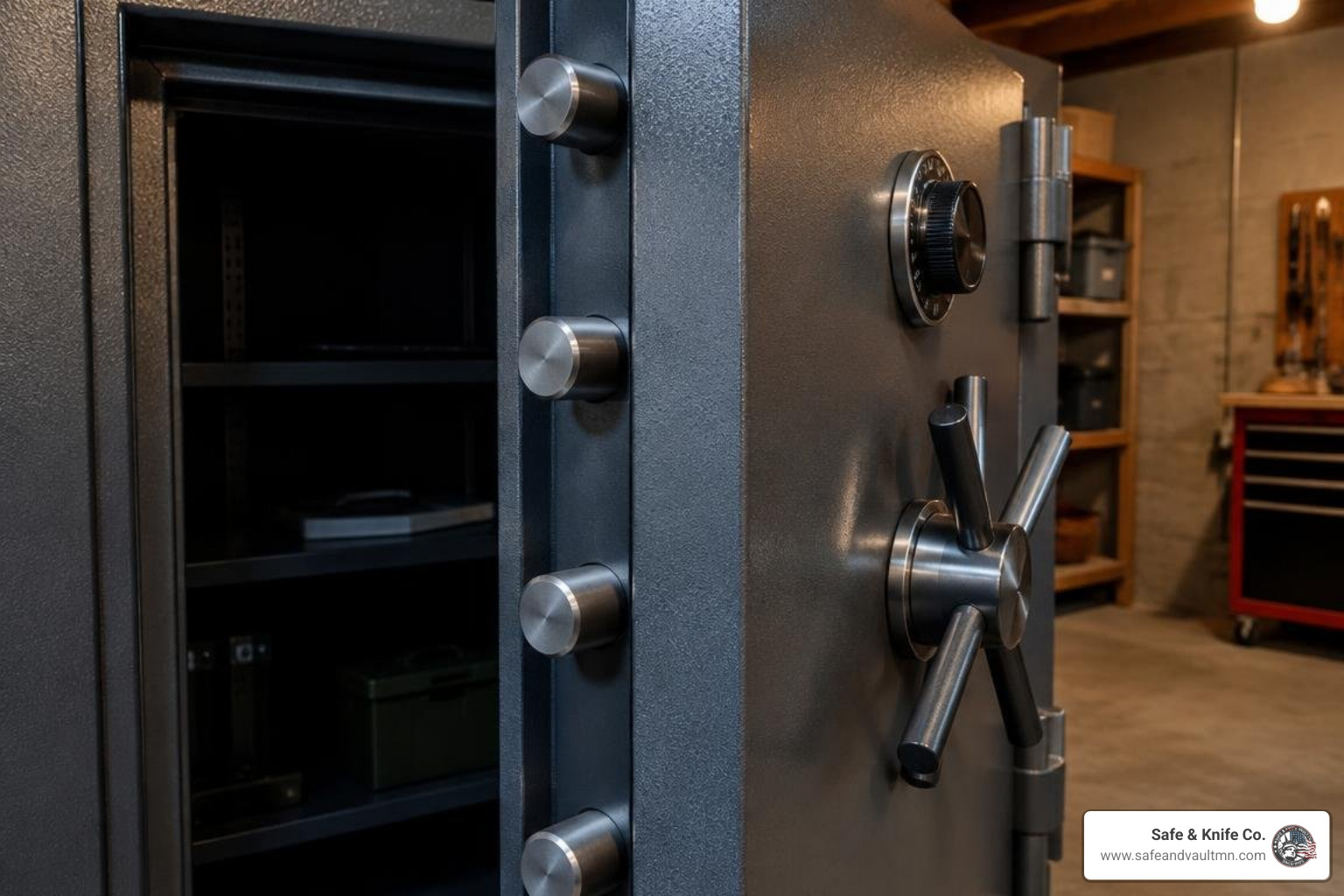
For each model under consideration, ask for the current manufacturer specifications and any applicable independent listings. Confirm the documented door construction, locking components, anchoring requirements, and safe weight before making a comparison.
| Item to Verify | What to Review in Current Documentation |
|---|---|
| Steel and Door Construction | Published body and door materials for the exact model |
| Locking Hardware | The lock type and any documented boltwork or protective features |
| Independent Listings | Any current third-party security or fire listing that applies to that model |
| Anchoring | Manufacturer instructions and the approved installation method |
| Interior Layout | Usable dimensions, shelving, and capacity for the firearms and accessories you intend to store |
Investing in a well-built gun safe provides a durable physical barrier that helps protect hunting equipment, home-defense firearms, vital documents, and family heirlooms over time.
Published steel specifications can be useful when comparing models, but they do not establish a safe’s overall resistance on their own. Review the complete manufacturer documentation and any verified listing for the exact model, including the body, door, lock, and construction details that the manufacturer identifies.
When reviewing safe specifications, you may encounter several common industry testing standards and security features. Confirm the exact listing or feature in the manufacturer’s current specifications before relying on it:
Anchoring your safe directly into structural floor framing or a solid concrete foundation is also strongly recommended. Proper anchoring helps prevent the safe from tipping and reduces leverage points that intruders could use against door seams.
During a home fire, temperatures can rise rapidly. Without thermal insulation, exterior steel can conduct heat into the interior, which may damage firearm finishes, optics, ammunition, and paper documents. Checking how a safe is insulated helps you choose an appropriate level of protection for your home.
Independent testing laboratories, such as Underwriters Laboratories, publish standards for evaluating thermal performance using standardized furnace temperature curves. Treat fire ratings and fire-duration claims as model-specific, and rely on current manufacturer documentation or verified test listings when comparing safes.
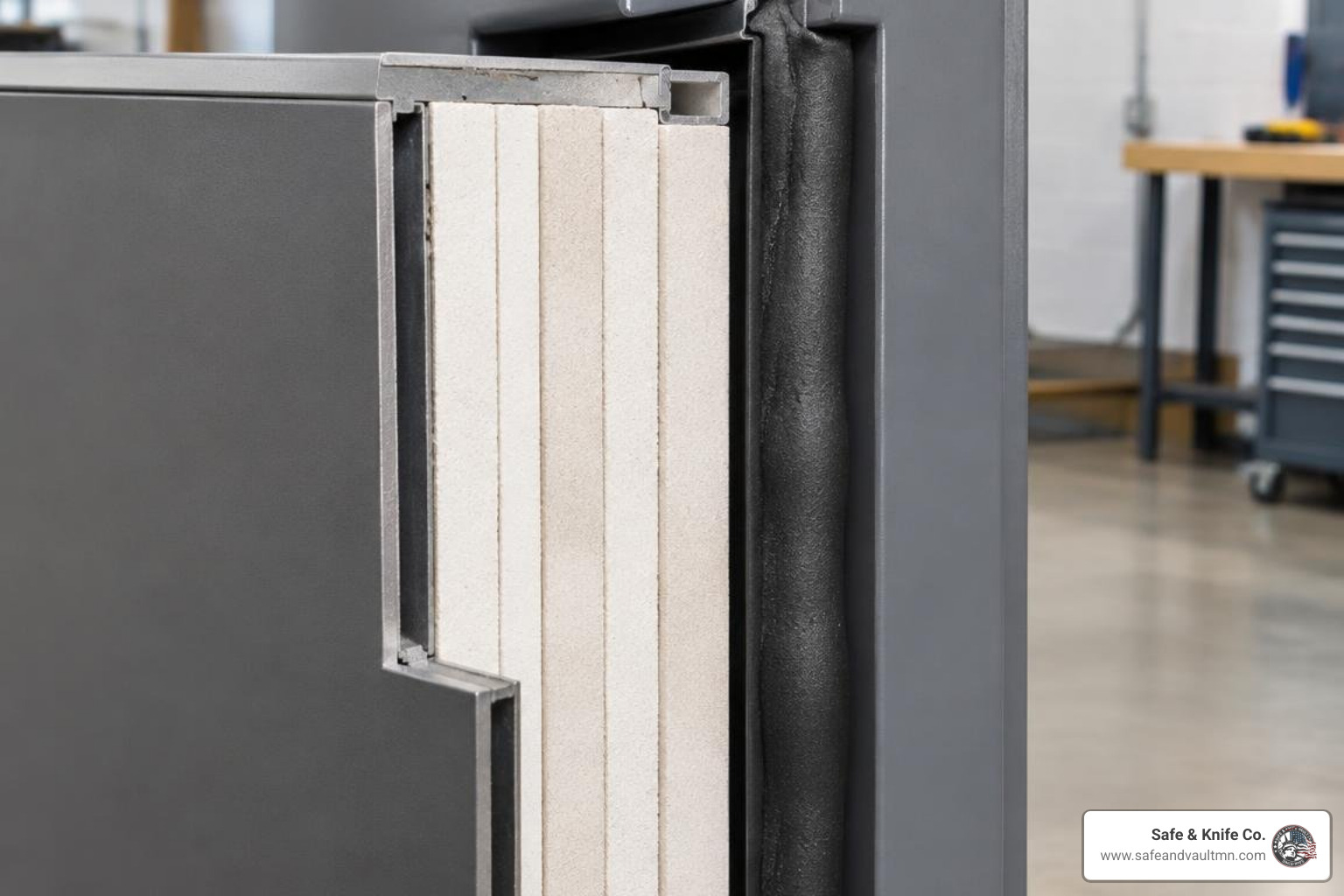
For a model that advertises fire protection, review the current manufacturer documentation and any applicable independent listing to see exactly what is claimed and how the model was evaluated.
Reviewing manufacturer-published fire information alongside your local emergency response considerations will help you determine the right level of thermal insulation for your needs.
Selecting the right residential safe requires balancing usable interior dimensions, structural floor load limits, internal humidity control, and convenient access. Heavy steel safes concentrate substantial weight across a relatively compact footprint. Positioning your safe on a ground-level concrete slab or directly over reinforced load-bearing floor joists helps ensure long-term structural stability. Installing an interior electric dehumidifier rod or desiccant pack can also help regulate humidity to protect metal finishes and wooden stocks.
Published capacity figures and interior layouts vary by model. Before purchasing, compare the documented interior dimensions and layout with the firearms, optics, accessories, and other items you plan to store:
Choosing the right lock format depends on your daily operational preferences and access needs:
When comparing safe manufacturers, look closely at published specifications for the exact model you are considering, including steel body thickness, door design, bolt configurations, lock options, and any verified fire or burglary ratings. Champion, Superior, and American Security (AMSEC) are especially relevant options for many home firearm-storage shoppers, while Fort Knox may also be worth comparing for certain configurations.
When reviewing an American Security gun safe, compare the current specifications for the exact model, including documented door construction, body steel, lock type, boltwork, and any published fire or burglary listing. Ask the showroom staff to help compare the models currently available for your storage needs.
When evaluating a Champion gun safe, check the exact model’s published steel thickness, door design, locking system, interior layout, and any manufacturer-published fire information. Compare the documented configuration with the firearms and accessories you plan to store.
When comparing Superior Safes, review the current specifications for each exact model to confirm steel thickness, boltwork, lock choices, shelving, and any documented fire-related information. Compare only the features identified in current manufacturer materials or showroom documentation.
Advertised capacity ratings generally reflect slim, unscoped long guns arranged tightly in factory configurations. When storing modern hunting rifles with optics, extended magazines, or tactical accessories, practical capacity is noticeably lower. Reviewing interior shelf and rack layouts before purchasing helps ensure the safe fits your actual collection.
Bolting a safe directly to a subfloor or concrete slab helps prevent tipping and reduces leverage opportunities for intruders using pry bars. Proper anchoring also prevents unauthorized individuals from attempting to move or transport the safe.
Entry-level metal utility cabinets are generally designed for basic lockable storage and often lack certified fireboard insulation or intumescent perimeter seals. For verified thermal protection, look for safes with documented testing laboratory ratings and multi-layer fire insulation.
Choosing the right safe for your home involves balancing steel thickness, fire insulation, dependable locking mechanisms, and proper placement. Depending on current showroom displays, visiting a local showroom may give you the opportunity to compare lock styles, view safe sizes, and discuss model specifications in person.
Safe & Vault MN operates physical retail showrooms in Rogers and Lakeville, Minnesota, serving homeowners across Minnesota and Wisconsin within approximately 250 miles of our showrooms (subject to service-address confirmation). To compare available styles and configurations in person, visit our Rogers or Lakeville showroom, or contact our team to confirm delivery options and discuss the right safe for your home security requirements.
If you’d like to get in touch with us, fill out a contact form and we will get back to you as soon as possible.
© 2026 Safe & Knife Co. / All Rights Reserved / Privacy Policy / Responsive Web Design